Fritz Haber 1868-1934
Haber-Bosch process - arguably the most importrant invention of the 20th Century!
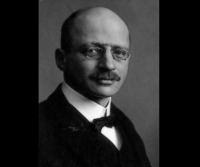
Fritz Haber was born on December 9, 1868, in Breslau, Germany, into one of the town’s oldest Jewish families. His mother, Paula], died only three weeks after giving birth to him — a tragedy that created a lifelong emotional strain between Fritz and his father, Siegfried Haber, a prosperous merchant. When Fritz was about six years old, Siegfried remarried Hedwig Hamburger. Fritz grew up as the only son and older half-brother to three half-sisters: Else, Helene, and Frieda. Even while attending the St. Elizabeth classical school in Breslau, the young Fritz was already deeply fascinated by chemistry. He conducted many experiments on his own at home and showed an early passion for science that would shape the rest of his life.
From 1886 to 1891, he studied chemistry at three places: the University of Heidelberg under Robert Bunsen, the University of Berlin under A. W. Hofmann, and the Technical School in Charlottenburg under C. Liebermann. After university, he worked for a short time in his father’s chemical business and at the Institute of Technology at Zurich under Professor Georg Lunge. He then spent a year and a half in Jena working with Ludwig Knorr. They wrote a paper together on a chemical called diacetosuccinic ester.
In 1894, Haber took a job as an assistant at Karlsruhe under Professor Hans Bunte. He stayed there until 1911. Bunte’s work on combustion and Carl Engler’s work on petroleum had a big influence on him. In 1896, he became a Privatdozent after writing a paper on the breakdown and burning of hydrocarbons. In 1898, he published a textbook called Electrochemistry, based on his lectures. That same year, he made important discoveries about using electricity to cause chemical changes. He showed how to get exact products by keeping the electric voltage steady at the cathode. He also explained how nitrobenzene is reduced step by step at the cathode. This became a model for many other reactions.
Over the next ten years, Haber did many more studies using electricity in chemistry. In 1904 he worked on the electrolysis of solid salts. He studied the balance between quinone and hydroquinone at the cathode, which helped create the quinhydrone electrode used to measure acidity. Building on earlier work by Max Cremer in 1906, Haber and his assistant Zygmunt Klemensiewicz invented the practical glass electrode in 1909. This tool is still widely used today to measure acidity in liquids. He also studied the electrical potential differences that arise when solid materials are placed in contact with water solutions — work that later became important for understanding batteries, sensors and even biological membranes. During the same period, Haber also studied the energy losses in steam engines, turbines and fuel-driven motors. He tried to find electrochemical ways to reduce these losses. Although he did not find a solution that was commercially applicable, he succeeded in developing a fundamental laboratory method for the clean combustion of carbon monoxide and hydrogen. He then studied flames and did important work on the Bunsen flame. He showed that a special water-gas balance happens in the bright inner cone of the flame, and burning of water-gas happens in the outer part. This gave scientists a new way to measure flame temperature using chemistry.
In 1901 Haber married Clara Immerwahr, a talented chemist. Like many assimilated German Jews of the time, both converted to Protestant Christianity in the hope of fully uniting with German society. They had one son, Hermann.
The most important invention for which Fritz Haber received the Nobel Prize in Chemistry (awarded for 1918, given in 1919) was the high-pressure catalytic method to make ammonia from nitrogen in the air and hydrogen gas — known today as the Haber-Bosch process. In 1905, he had written a book on the thermodynamics of industrial gas reactions. In it, he showed that a tiny amount of ammonia forms at 1000 °C using iron as a catalyst. Determined to make the reaction useful for industry, he spent years testing hundreds of possible catalysts until he succeeded with an iron catalyst promoted by small amounts of alumina and potassium oxide. By circulating nitrogen and hydrogen over this catalyst at very high pressure (150–200 times normal air pressure) and about 500 °C, he achieved the first practical synthesis. Working with engineers Carl Bosch and Alwin Mittasch, this breakthrough led to huge factories at Oppau and Leuna. Germany could now produce its own nitrogen compounds for explosives when World War I cut off its supplies in 1914, and the same process also produced ammonium sulfate fertilizer for farms. Its underlying principles later enabled the industrial production of methyl alcohol, the hydrogenation of coal (the Bergius method), and large-scale nitric acid manufacturing.
Yet the true global significance of the Haber-Bosch process goes far beyond wartime Germany. Before this invention, the world’s supply of nitrogen fertilizer was limited to natural sources such as bird droppings and Chilean saltpetre. The new method turned the unlimited nitrogen in the air into cheap, abundant fertiliser. It allowed global food production to keep pace with explosive population growth and is widely regarded as one of the most important inventions of the entire 20th century. It is credited with feeding roughly half of today’s more than 8 billion people.
In 1906, Haber became Professor of Physical Chemistry and Electrochemistry and head of a new institute at Karlsruhe. In 1911, he moved to Berlin-Dahlem to lead the Institute for Physical and Electrochemistry. He stayed there until 1933. When World War I started in 1914, Haber immediately volunteered and was appointed a consultant to the German War Office. A strong German patriot, he became convinced that chemical weapons could break the deadly stalemate of trench warfare and bring the war to a swift end, thereby saving far more lives in the long run — a view he expressed to the German High Command and colleagues in reports and discussions in 1914–1915. He directed the development of poison gas and personally supervised the first large-scale chlorine gas attack at Ypres on 22 April 1915. He also led work on defensive measures such as improved gas masks. This intense involvement in chemical warfare took a severe toll on both his health and his personal life. Just days after the Ypres attack, Clara Immerwahr, who strongly opposed the use of gas as a weapon, committed suicide in their garden using Haber’s service revolver. Haber left for the Eastern Front the same night to continue his work. The stress of the war years also worsened his already fragile heart condition.
In 1917 Haber married Charlotte Nathan, who also converted to Christianity. They had two children, Eva and Ludwig Fritz (“Lutz”), but divorced in 1927.
Between the two world wars, Haber developed a firedamp whistle for the protection of miners, a sensitive quartz-thread manometer for measuring extremely low gas pressures, and he demonstrated that the adsorption of gases on solid surfaces can result from unsaturated valence forces of the solid body — an insight that later provided the foundation for Irving Langmuir’s theory of adsorption.
In 1933, the Nazi race laws forced most of Haber’s Jewish staff to leave. Rather than agree to the dismissals, Haber resigned in protest. British colleagues, led by Sir William Jackson Pope (a chemistry professor at Cambridge University), quickly arranged an official invitation for him to come to England. Haber accepted the offer of a temporary research position in Pope’s laboratory at Cambridge. While he was there, Chaim Weizmann offered him the directorship of the Daniel Sieff Research Institute (today the Weizmann Institute of Science) in Rehovot, Palestine. Haber had first met Weizmann the year before, when Weizmann visited his institute in Berlin to discuss plans for a new research center in Palestine. Haber accepted the offer. Most notably, two of his former assistants later became professors and founded chemistry departments at the Hebrew University of Jerusalem: Ladislaus Farkas became the first Professor of Physical Chemistry in 1936 and founded that department, while Max (Mordecai) Bobtelsky founded the Department of Inorganic and Analytical Chemistry. Discussions were also held about appointing him as full professor at the Hebrew University of Jerusalem. Haber also sent his large private library to Palestine, where it would later become the Fritz Haber Library at the Sieff Institute. During this difficult period he wrote to his longtime friend Albert Einstein (whom he had helped bring to Berlin in 1914) admitting he had never felt so Jewish as now, reflecting on Einstein’s long-standing warnings about placing too much trust in Germany. Because of his heart disease, and finding the cold, damp English winter too harsh, he soon left Cambridge accompanied by his half-sister Else Haber Freyhahn and set out for Palestine via Switzerland to take up his new post at the Sieff Institute. Deeply saddened by his rejection from the country he had loved and served so faithfully, Fritz Haber died on January 29, 1934, in Basel, Switzerland, before he could reach his destination.
Excerpts from Nobel Lectures, Chemistry 1901-1921: Haber lived for science, both for its own sake and also for the influence it has in moulding human life and human culture and civilization. Versatile in his talents, he possessed an astonishing knowledge of politics, history, economics, science and industry and he might have succeeded equally well in other fields. The hesitation with which he finally decided to be a chemist has already been mentioned. He welcomed administrative responsibilities in addition to research work. Always approachable and courteous, he was interested in every kind of problem. His ability to clarify, in a few sentences, the obscurities of a scientific discussion, was a valuable feature of the colloquia he held at his Institute and his organising talent made him a model Director of a large establishment in which he allowed complete freedom, to the workers under him, maintaining, nevertheless, a remarkable control over the activities of the Institute as a whole. A man of forceful personality, he left a lasting impression on the minds of all his associates.
Apart from the Nobel Prize, Haber received many honours during his life. At Max von Laue's instigation, the Institute for Physical and Electrochemistry at Berlin-Dahlem was renamed the Fritz Haber Institute after his death.